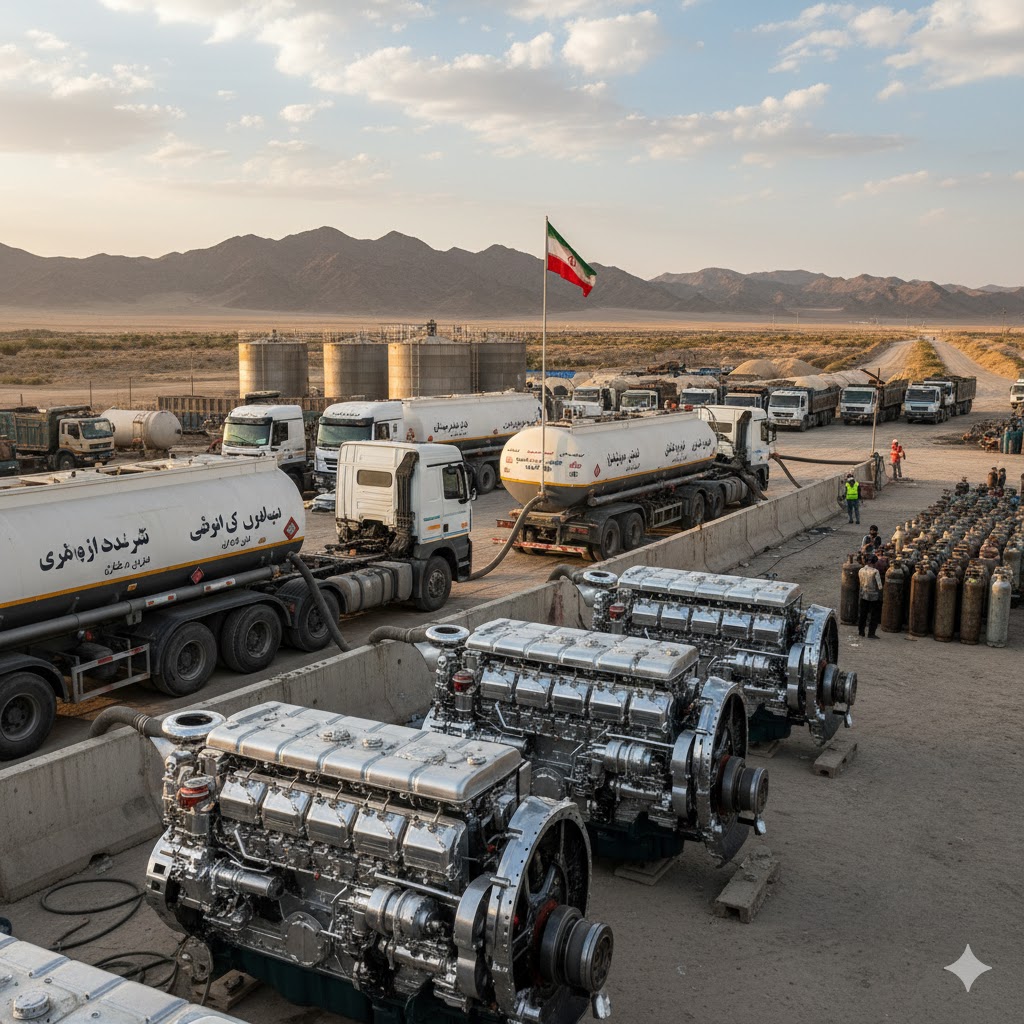
In recent months, reports have emerged about the beginning of Russian petroleum exports to Afghanistan via rail routes. News sources have mentioned the shipment of the first consignments of Russian diesel through transit corridors (including routes passing through Iran). For example, there have been reports of 5,000-ton diesel shipments. These reports suggest an increase in fuel trade between Russia and Afghanistan; however, the important point is that initial and pilot shipments are typically small in volume and rarely indicate the arrival of a “massive train” carrying hundreds of thousands of tons of fuel.
Even If a Train Arrives, Will Prices Drop “Several Times”?
A significant drop in fuel prices within a country depends on several factors: import volume, purchase price per barrel/ton, transportation and distribution costs, taxes and duties, and the state of domestic reserves and demand. A train carrying several thousand tons of diesel can temporarily increase local supply, but Afghanistan’s fuel market—particularly during cold seasons with high winter demand—requires large and continuous shipments to have a major and lasting impact on prices. Therefore, the claim that prices will become “several times cheaper” appears highly exaggerated unless there are long-term agreements and very large volumes offered at deep discounts
Logistical and Legal Constraints Preventing Major Price Reductions
- Rail Capacity and Unloading/Distribution: Transporting hundreds of thousands of tons of fuel requires strong rail infrastructure, unloading terminals, and distribution networks. A 5,000-ton pilot shipment represents a starting point, not a solution to supply shortages.
- Sanctions and International Restrictions: Fuel trade with Russia is affected by sanctions, price caps, and limits on shipping and insurance services. As a result, payment mechanisms and transportation arrangements may face complications that prevent rapid and large-scale imports at very low prices.
- Domestic Considerations in Afghanistan: Even if fuel enters at a lower price, fair distribution, preventing the black market, and ensuring proper tax collection pose challenges that influence the final consumer price.
Possible Scenarios
- Limited and Temporary Scenario:
A few trains arrive with relatively small shipments — this may create short-term downward pressure on prices locally, but it affects market availability more than the nationwide price structure. - Long-Term, Regular Deal with Significant Discounts:
If long-term contracts with major discounts are signed and infrastructure is developed, price reductions become possible; but this requires time, investment, and political/financial agreements. - Media/Promotional Scenario:
Sometimes videos or sensational reports are circulated for political or promotional purposes, and the actual volume or impact of the shipment may be exaggerated. Official confirmations and quantitative data are always needed.
What Should Be Separated from Rumors?
The presence of a train may be real (pilot shipments are documented), but an “immediate and several-fold decrease in prices” is unlikely without sustained shipments, large volumes, and lower purchase prices.
The international and regional fuel market is complex; prices are influenced by the global crude oil market, exchange rates, and refining/distribution costs — not just a single shipment or new route.
Final Conclusion and Advice to Readers
- Reliable reports indicate that Russia’s petroleum exports to Afghanistan are growing, with shipments transported via road and rail, but these are still in early and testing phases.
- A dramatic or “several-fold” drop in fuel prices requires continuous shipments, reliable infrastructure, and long-term commercial and financial agreements; therefore, one should not expect a price miracle at this stage.
- Be cautious about social-media rumors: always wait for official announcements from credible sources (relevant ministries, importing companies, or official statistics authorities) to understand the real picture.