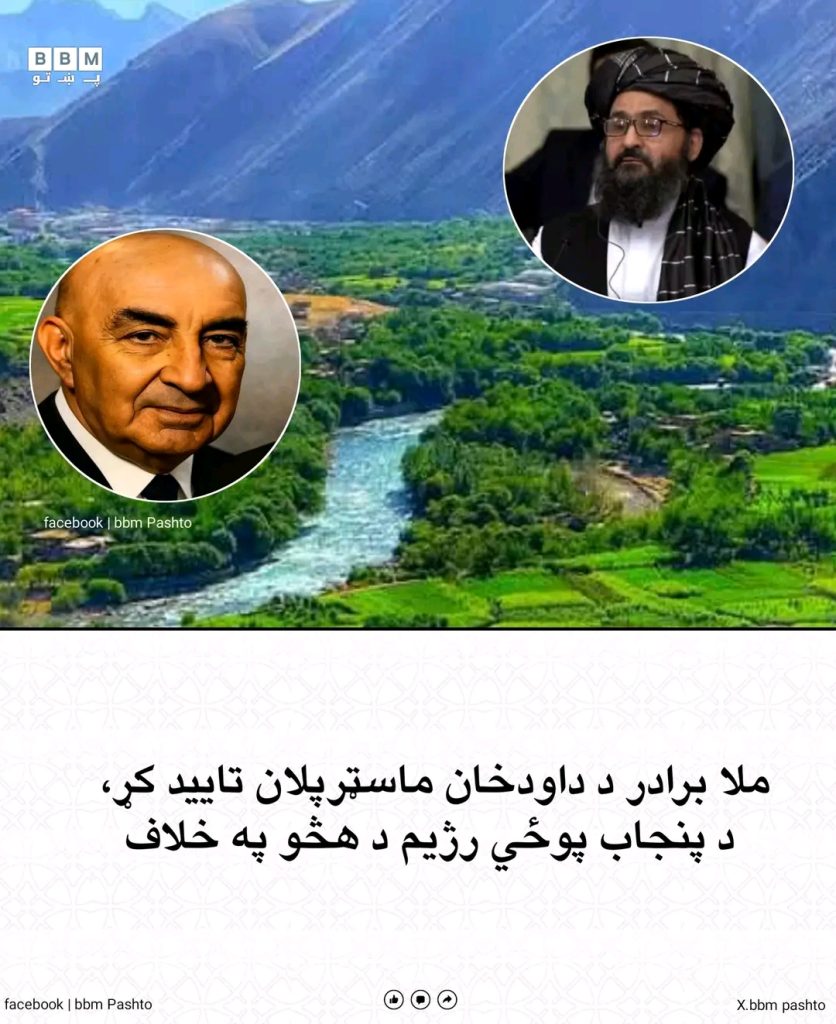
KABUL — The Afghan government has officially approved the implementation of a long-delayed strategic water transfer project designed to channel water from the Kunar River to the Gambiri Desert and the Darunta Dam, a plan originally conceived during the era of former Afghan President Mohammad Daoud Khan. Officials say the revival of this master plan marks a significant step toward strengthening Afghanistan’s agricultural capacity, water management systems, and overall economic development.
According to informed sources, the project was part of Daoud Khan’s comprehensive national development strategy, aimed at transforming arid lands into productive agricultural zones while ensuring sustainable use of Afghanistan’s abundant water resources. Experts have long considered the plan one of the most forward-looking infrastructure visions in the country’s modern history.
During the years of the former republic, however, the project faced repeated delays and internal opposition. Sources indicate that certain individuals within state institutions, allegedly influenced by external intelligence interests, attempted to derail the original master plan. Instead of executing the water transfer system, alternative proposals such as canal redirection and airport construction were promoted, which critics argue undermined the strategic objectives of the original design.
Now, Afghanistan’s Deputy Prime Minister for Economic Affairs, Mullah Abdul Ghani Baradar, has formally endorsed the project, granting it official approval and placing it back on the national development agenda. Government officials say this decision reflects a renewed commitment to long-term economic planning, food security, and responsible water governance.
Economic analysts note that transferring water from the Kunar River to the Gambiri region and Darunta Dam could dramatically expand irrigated farmland, increase crop yields, and reduce dependency on food imports. The project is also expected to create thousands of jobs during its construction and operational phases, providing much-needed employment opportunities in eastern Afghanistan.
Water management specialists emphasize that Afghanistan’s rivers represent one of its most valuable natural assets. Proper utilization, they argue, can help mitigate drought risks, stabilize rural livelihoods, and support industrial growth. The Darunta Dam, in particular, is seen as a critical component for regulating water flow and supporting both agriculture and energy production.
Local farmers and community leaders have welcomed the government’s decision, expressing hope that the project will bring long-term stability and prosperity to regions that have historically suffered from water scarcity and underdevelopment. Many believe that reviving national infrastructure projects abandoned decades ago is essential for building economic self-reliance.
Observers also point out that implementing the Daoud Khan master plan carries symbolic significance. It signals a return to nationally driven development priorities rather than fragmented or externally influenced initiatives. By focusing on strategic water infrastructure, the government aims to lay the foundation for sustainable growth rooted in Afghanistan’s own resources.
While officials have not yet released a detailed timeline or budget, they confirmed that technical assessments and feasibility studies will begin soon. Authorities stress that transparency, environmental considerations, and community involvement will be key components of the implementation process.
If completed successfully, the project is expected to deliver wide-ranging benefits, including improved agricultural output, better water distribution, enhanced food security, and stronger economic resilience. Analysts describe it as a potential turning point in Afghanistan’s approach to managing its natural resources for national development.
As Afghanistan continues to seek economic stability and self-sufficiency, the revival of this historic water transfer master plan is being closely watched as a test of the government’s ability to translate long-term vision into tangible results.