In recent days, a new topic has emerged in Afghanistan’s social sphere, sparking varied reactions among citizens, healthcare professionals, and medical authorities. A
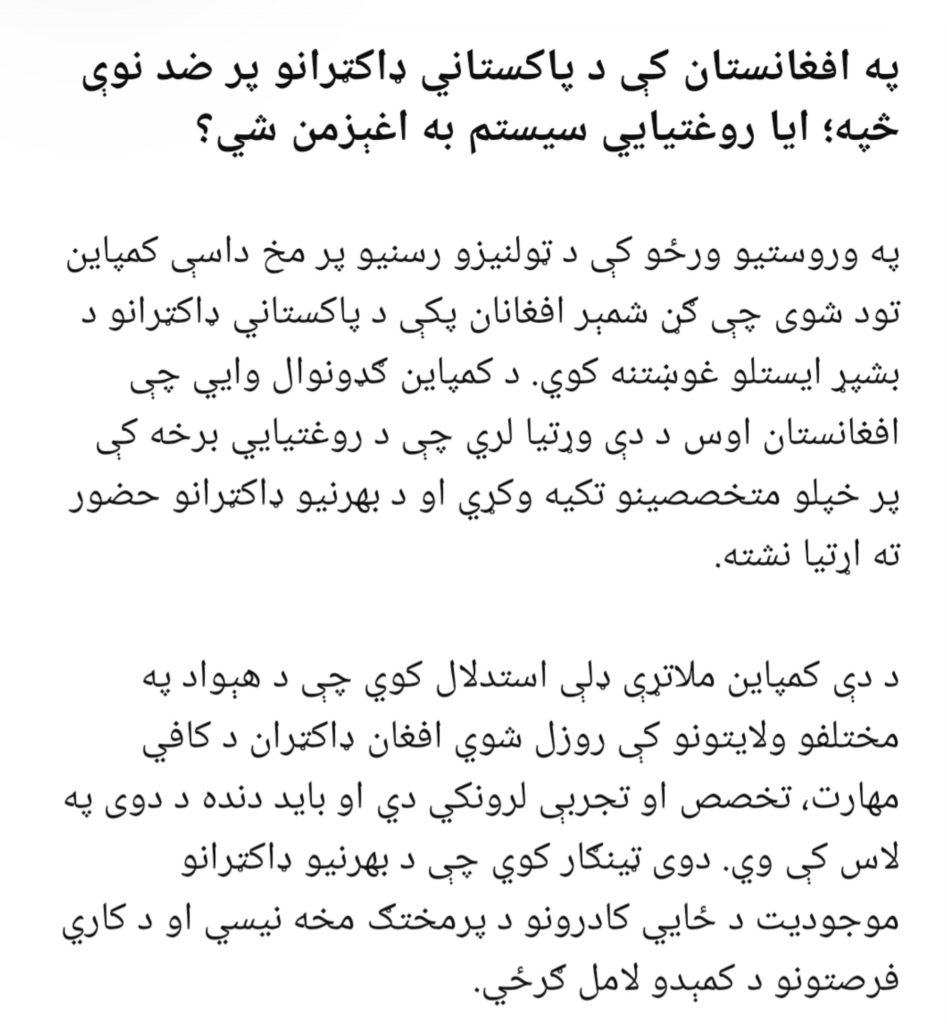
number of social media users have launched a campaign calling for the removal of Pakistani doctors from Afghanistan. Supporters of this movement argue that the presence of foreign specialists—particularly Pakistani physicians—is unnecessary for Afghanistan’s healthcare system, and that medical services should be carried out entirely by local staff.
This campaign, which mainly circulates online, is based on the belief that Afghanistan now has a significant number of trained doctors, nurses, technicians, and healthcare specialists, and that continued reliance on foreign professionals could reduce job opportunities and growth prospects for local workers. Supporters claim that domestic capacities, if managed properly and given appropriate opportunities, are fully capable of delivering standard medical services, and that the presence of foreign physicians reduces the role of Afghan specialists.
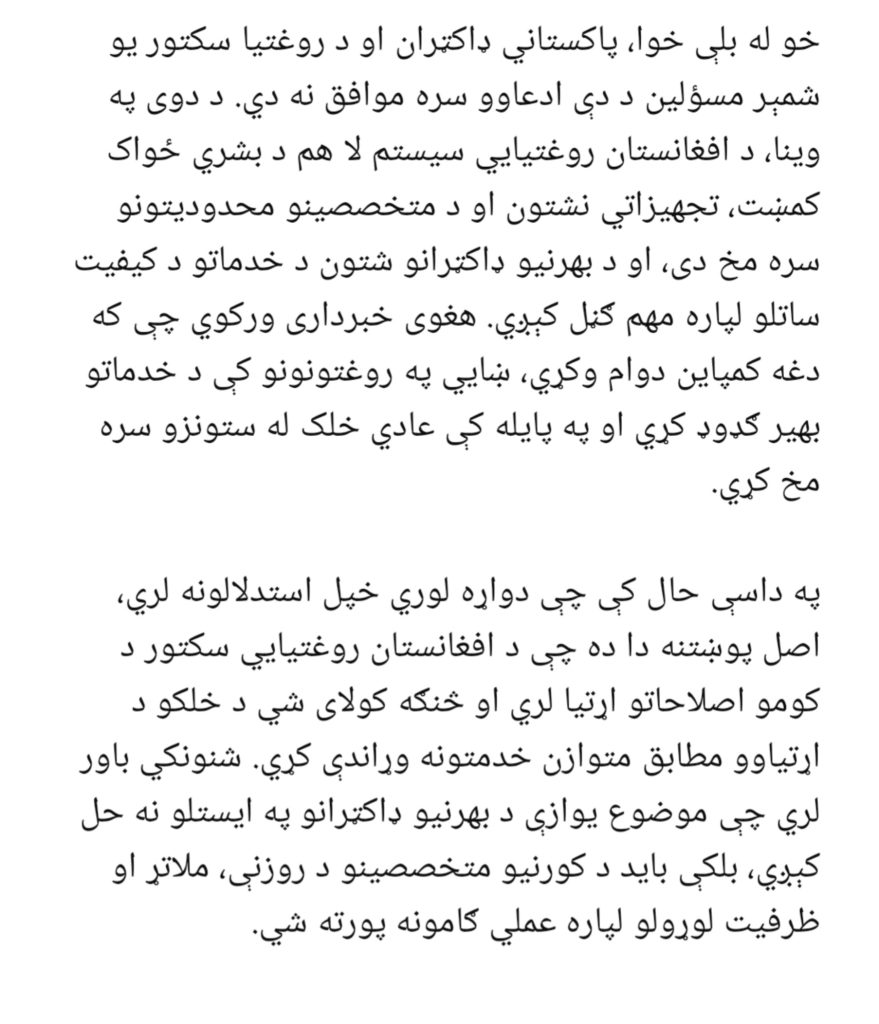
However, many Pakistani doctors, along with officials in several Afghan hospitals and health centers, emphasize that this campaign is unfounded and could create serious challenges for the country’s healthcare sector. They point out that over the past years, many foreign doctors—including Pakistanis—have played a crucial role in providing specialized services, especially in cities and regions where local specialists have been insufficient.
Pakistani doctors currently working in Afghanistan say their aim is to support the Afghan healthcare system, treat patients, and fill urgent gaps in specialties where there is immediate need. According to them, collaborative medical work and regional cooperation in healthcare can raise the quality of medical services rather than diminish it.
Health officials also note that many hospitals still face shortages of experienced specialists. In fields such as advanced surgery, cardiology, orthopedics, neonatology, anesthesia, and several diagnostic areas, the need for trained professionals remains significant. Therefore, the complete removal of foreign doctors could create gaps in areas where Afghanistan’s healthcare system has not yet developed sufficient capacity.
Additionally, some social and public health experts believe that calling for the mass expulsion of foreign specialists—without a careful assessment of the consequences—could reduce the quality of medical services in certain areas. They stress that Afghanistan should strengthen domestic capacities gradually and with proper planning, while simultaneously benefiting from the experience of foreign experts to ensure effective transfer of knowledge and skills.
Another element in this debate relates to public trust. Some citizens express satisfaction with the services provided by Pakistani doctors, noting that many of these specialists have helped Afghans under difficult working conditions over the years. They argue that health policies should be based on professional standards and the real needs of society—not on emotions or online campaigns fueled by sentiment.
Several Afghan specialists also offer a different perspective. They believe that the presence of foreign doctors alongside Afghan professionals can create a shared environment for knowledge exchange and scientific advancement. In their view, instead of completely removing foreign specialists, Afghanistan should establish a system that both supports local capacity and improves the technical skills of the healthcare workforce.
Ultimately, it is clear that the question of dismissing or retaining foreign doctors in Afghanistan requires comprehensive evaluation. The country must consider its real medical needs, current capacities, distribution of specialized personnel, and the potential consequences of any decision. Although Afghanistan’s healthcare system has achieved notable progress in recent years, it still requires strengthened human resources, sound planning, and the simultaneous use of both local and international expertise.
If managed properly, today’s discussions could become an opportunity to shape the future of Afghanistan’s healthcare system—one in which domestic capacities are strengthened, regional scientific cooperation continues, and medical services become more accessible, standardized, and effective for the people of Afghanistan.