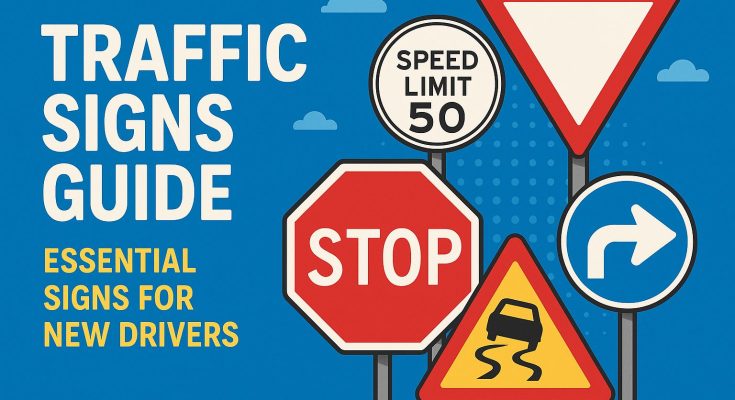
Learning traffic signs is an essential skill for every new driver. These signs aren’t just roadside signs – they’re a global safety language that helps prevent accidents, regulate traffic flow, and ensure everyone’s safety. Whether you’re preparing for a driving test or just want to refresh your road information, understanding traffic signs is easier than you think. By taking the right approach, you can recall them quickly and with confidence.
In this guide, you’ll learn the common types of traffic signs, their significance, and easy ways you can memorize them without a problem.
Why Traffic Signs Are Important.
Traffic signs are there to convey rules, warnings and useful information. To get to know them better:
Reduces the risk of accidents
Driving test for the first time
Be more confident when driving.
Be aware of road changes and hazards
It makes it easier to drive to new places.
Even experienced drivers benefit from reviewing traffic signs, as the rules and the road system can change over time.
The main types of traffic signs
Traffic signs are generally divided into three major categories. The easiest way is to learn them through shape and color. So you can understand what they mean without reading.
Regulatory Signs (Restrictive and Mandatory Principles)
Regulatory signs tell drivers which actions are allowed and which are prohibited. Violations can result in fines, penalties, or dangerous situations.
The common examples:
stop sign – a red eight-cornered sign with a full stop order
Yield sign – inverted triangle, direction to give way
Speed Limit – The legal limit of speed.
No entry, no U-turns, no parking
The way to remember:
Regulatory signs are mostly red, white, or black, indicating strict mandatory rules.
Warning Signs (Dangers or Changes Ahead)
Warning signs alert drivers to potential hazards or changes in road conditions. so that you can be careful.
The common examples:
High-speed or winding roads
The walkers’ path
slippery road
School Zone or Animal Crossing.
The way to remember:
Most warning signs are yellow and diamond-shaped, symbolizing caution and awareness.
Guide and information signage (guidance and facilitation)
These signs provide drivers with information about routes, locations, and services.
The route number and route
Distance and destination signs.
Parking, hospital, petrol pump.
Directions to Tourist Sites and Landmarks
The way to remember:
Guide signs are usually green, blue, or beige, based on whether they relate to the route, facility, or recreation.
How to remember traffic signs easily.
It doesn’t take a lot of practice to learn traffic signs. A few simple techniques help them to brainstorm faster.
Use flashcards and photographs.
Images stay in the mind for a long time. Digital or printed flashcards are perfect for daily practice.
Group the signs by color and shape.
When the pattern is understood, the meaning can also be recognized by guessing.
Practice theory test
Many apps and websites provide free traffic sign quizzes. Repeated practice builds confidence.
Pay attention to the signs during the trip.
Observe the signs while driving or as a passenger. Practical observation strengthens memory.
Read in a short session.
Five to ten minutes a day is more effective than long sessions.
The last things
Passing traffic signs is the first step to safe and responsible driving. By understanding the basic types of regulatory, warning and guide signs, you can quickly identify road rules and hazards. Through constant practice and the simple methods outlined in this guide, every new driver can easily learn traffic signs and feel more confident on the road.


