Recent reports suggesting the demolition of Ariana Cinema, located on Pashtunistan Street in Kabul, and its replacement with an international commercial market have
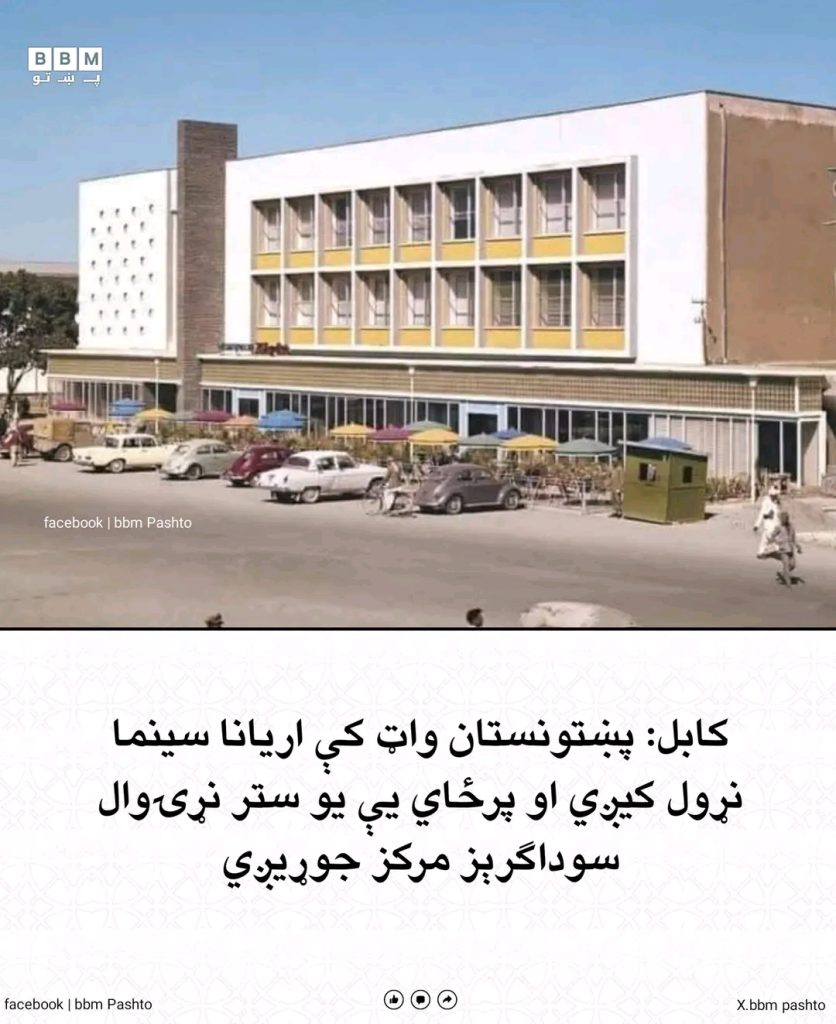
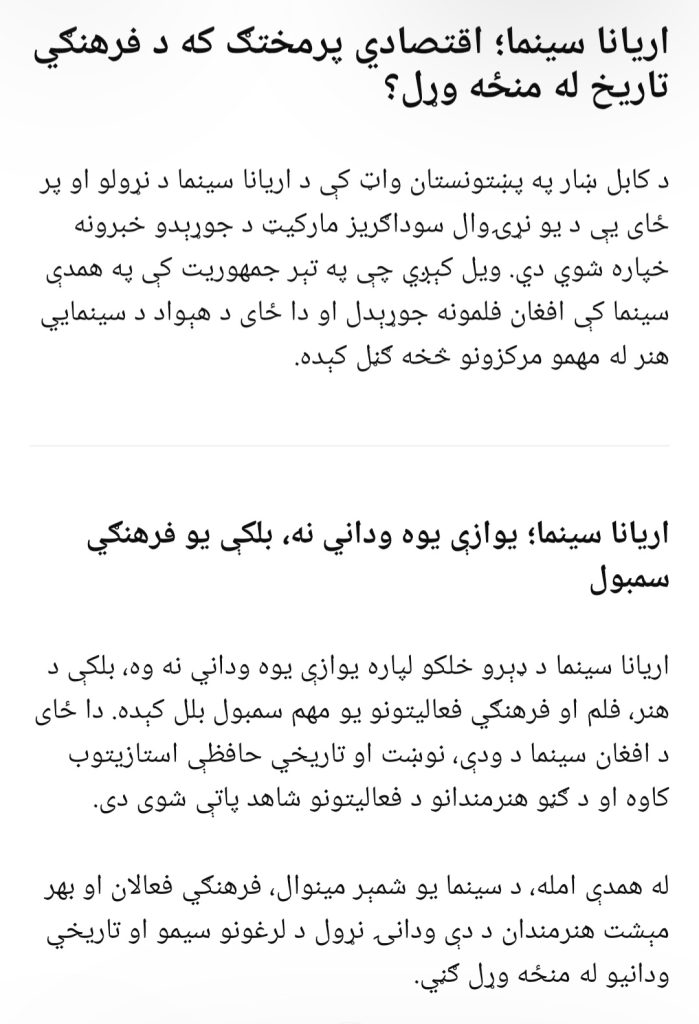
sparked a wide-ranging public debate. For many Afghans, this issue goes far beyond urban development and touches the deeper question of how economic progress should interact with cultural heritage.
During the previous republic era, Ariana Cinema served as one of Afghanistan’s most prominent centers for film production and cinematic expression. Afghan movies were screened and produced there, and the building itself became closely associated with the country’s artistic identity. Over the decades, Ariana Cinema was not merely a physical structure but a symbolic space where storytelling, creativity, and cultural dialogue flourished.
Cultural activists, cinema enthusiasts, and Afghan artists living abroad have voiced strong concerns over the potential demolition. They argue that tearing down Ariana Cinema would mean erasing an important chapter of Afghanistan’s cinematic history. In their view, such historic venues represent collective memory and national identity, and once destroyed, they cannot be meaningfully replaced. Many fear that the loss of Ariana Cinema would further marginalize Afghanistan’s already fragile cultural heritage.
Supporters of preserving the cinema emphasize that cultural landmarks are not obstacles to development but assets that can contribute to social cohesion and historical continuity. They point out that many countries around the world have successfully restored historic cinemas and integrated them into modern urban landscapes, turning them into multifunctional spaces that host cultural events, museums, or creative industries.
On the other side of the debate, proponents of the proposed international commercial market highlight Afghanistan’s urgent economic needs. They argue that Kabul requires modern commercial infrastructure to attract investment, create employment opportunities, and stimulate economic growth. According to this perspective, large-scale commercial projects can help revitalize urban areas, increase municipal revenue, and provide livelihoods for thousands of families.
Supporters of economic development stress that unemployment and poverty remain among Afghanistan’s most pressing challenges. They believe that projects such as international markets can contribute to long-term stability by strengthening the local economy and encouraging private-sector investment. From this viewpoint, modernization is essential for Kabul to function as a competitive and livable city.
However, many analysts argue that economic development and cultural preservation do not have to be mutually exclusive. Urban planning experts suggest that a middle path could be explored—one that recognizes the historical and artistic value of Ariana Cinema while also addressing economic objectives. Options such as renovation, adaptive reuse, or hybrid projects combining commercial functions with cultural preservation have been proposed as viable alternatives.
Experts warn that ignoring cultural heritage in favor of purely commercial development may lead to irreversible losses. Cultural identity, they argue, plays a crucial role in national resilience, social unity, and international image. Preserving historic sites can also generate economic value through cultural tourism, education, and creative industries.
The debate surrounding Ariana Cinema reflects a broader challenge faced by many developing societies: how to modernize without losing their historical soul. For Afghanistan, a country with a rich but vulnerable cultural legacy, these decisions carry particular weight.
Ultimately, the question remains open to public conscience and policy-makers alike: does true progress lie solely in commercial expansion, or does it also require safeguarding art, history, and cultural memory? For many Afghans, the answer may define not only the future of Ariana Cinema, but the direction of national development itself.