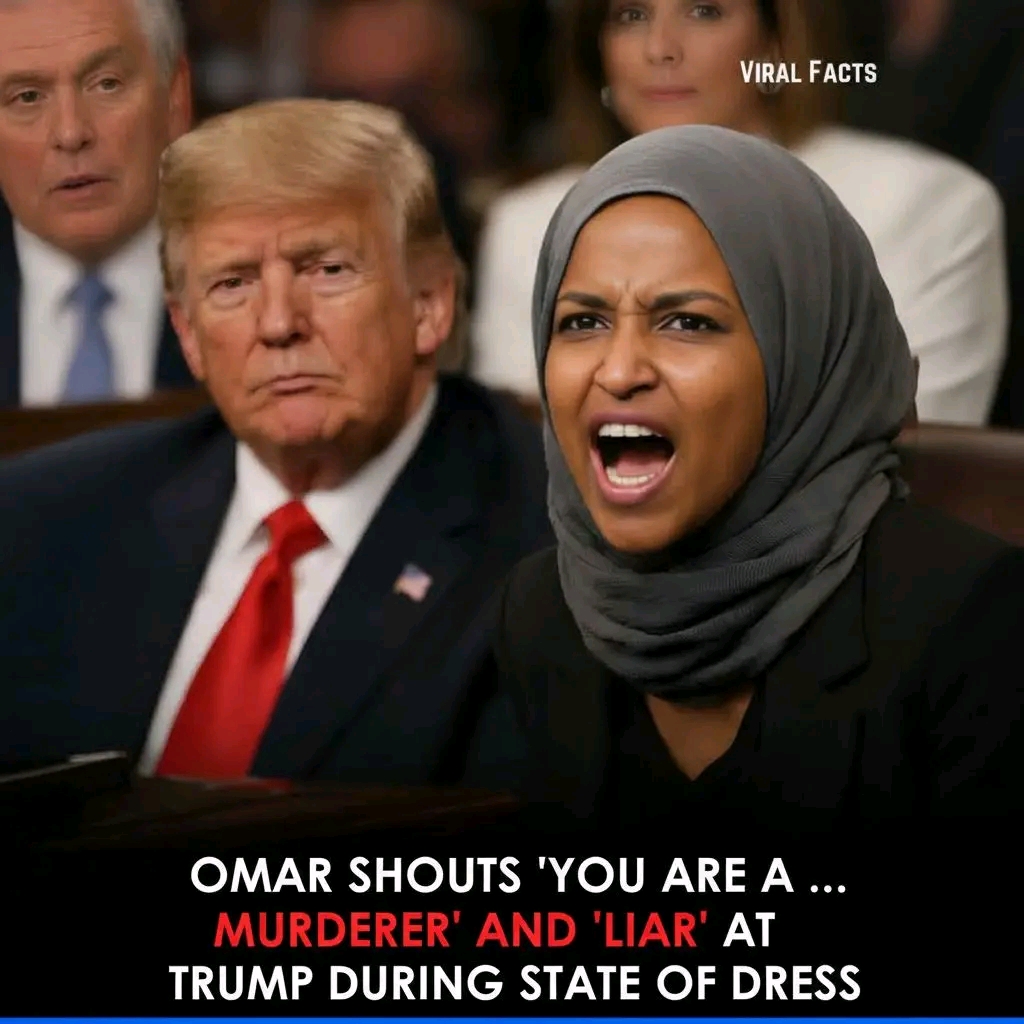
Political tensions briefly came into focus during a recent State of the Union address after reports indicated that Representative Ilhan Omar voiced critical remarks toward President Donald Trump, momentarily interrupting proceedings inside the House chamber. The incident occurred during one of the most formal and closely watched events in the American political calendar, drawing immediate attention from lawmakers and media observers.
The exchange highlighted the continuing partisan divisions shaping political debate in Washington, D.C. While presidential addresses traditionally emphasize national unity and policy direction, moments of disagreement can sometimes emerge amid strong political differences. Following the interruption, reactions from members of Congress were swift, reflecting contrasting views across party lines.
Some lawmakers criticized the disruption, describing it as inconsistent with the decorum typically expected during a joint session of Congress. Supporters of this view argued that the State of the Union address is a ceremonial occasion intended to maintain respect for institutional traditions regardless of political disagreements. Others, however, suggested that the incident reflected growing frustration surrounding ongoing policy debates and ideological differences within the federal government.
Political analysts note that interruptions during major presidential speeches are not entirely unprecedented in modern American politics. Over the years, similar moments have occasionally occurred during nationally televised addresses, often becoming symbolic of broader political tensions. Such incidents frequently attract widespread public discussion, especially in an era where political events are instantly amplified through social media platforms and continuous news coverage.
The reported exchange quickly became a topic of conversation across news outlets and online communities, with commentators debating both the tone of political discourse and the evolving nature of congressional norms. Observers say these reactions demonstrate how heightened political rhetoric continues to influence public perception of leadership, governance, and democratic institutions.
As polarization remains a defining feature of the current political climate in the United States, episodes like this illustrate how deeply divided perspectives can surface even during traditionally ceremonial events. Analysts suggest that moments of visible disagreement may continue to shape political messaging and public debate as lawmakers move forward into upcoming legislative sessions and future election cycles.
Overall, the incident serves as a reminder of the intense political environment in Washington, where policy disagreements, institutional traditions, and public expectations increasingly intersect on the national stage.


