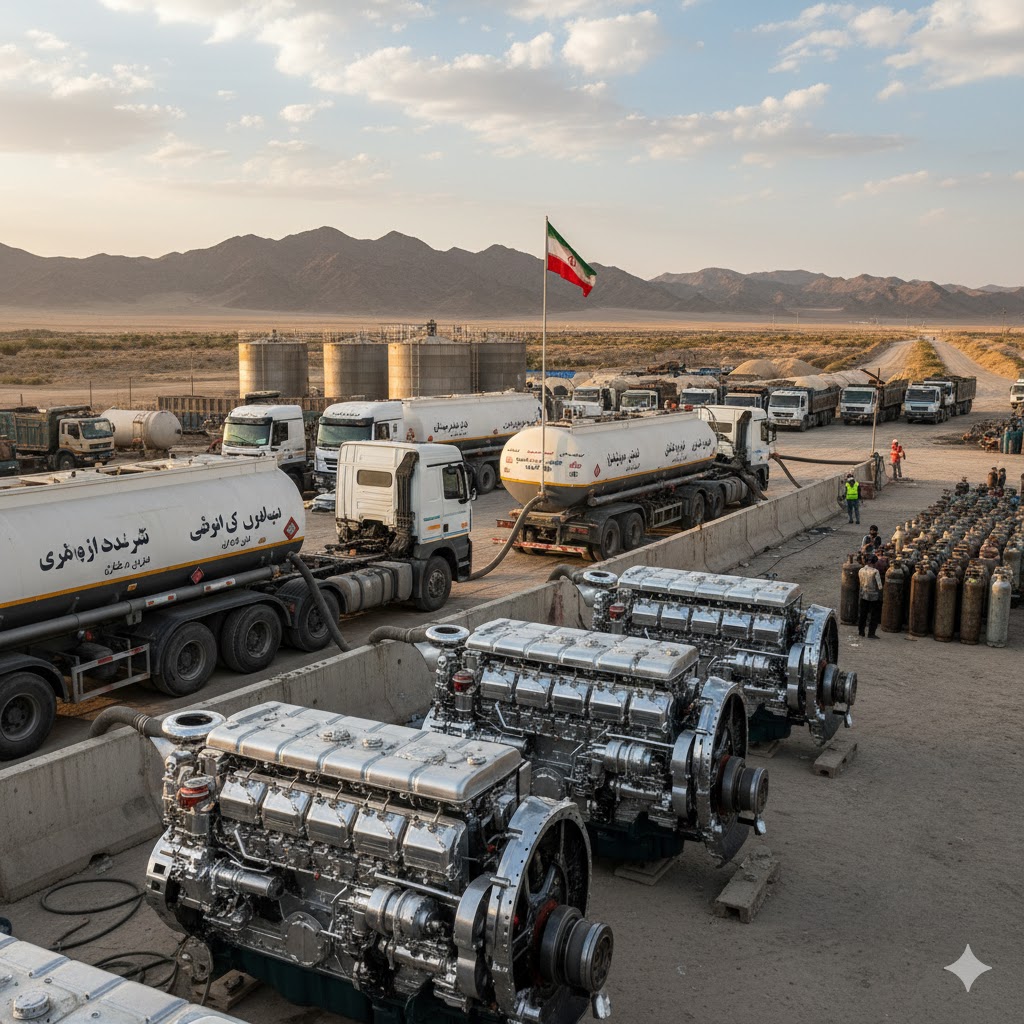
KABUL, Afghanistan – A large shipment of fuel and natural gas from Iran has arrived in Afghanistan, bringing new hope to consumers and businesses worried about high energy prices. Government officials say these imports will significantly reduce the prices of petrol and liquefied petroleum gas (LPG) across the country.
According to the Ministry of Commerce and Industry, the retail price of gasoline has been reduced to 30 Afghani per liter, while liquid gas will now be available for 20 Afghani per liter – a major reduction compared to recent months. The ministry confirmed that several thousand tons of fuel had entered Afghanistan through the western border routes.
A spokesman for the ministry said during a press briefing in Kabul:
“This supply will help stabilize the market and ensure that we have enough stock for the winter.
A support for the economy
Afghanistan has long been dependent on its neighbours, particularly Iran, Turkmenistan and Uzbekistan, for energy needs. Due to fluctuating global oil prices and lack of local production, these imports play an important role in driving the country’s economy.
According to local economists, the new fuel supplies could provide short-term relief.
Abdul Wasey, an economic analyst in Kabul, said:
“The reduction in energy prices reduces the cost of transport and production, which keeps the prices of basic commodities under control. But for long-term benefit, the government has to ensure stable supply and fair prices.
relief for ordinary Afghans.
This news has been heard with joy in Kabul and other major cities. Taxi drivers, traders, and ordinary families say the lower prices will ease financial pressures, especially as winter approaches.
Ahmed Khan, a taxi driver, said:
“Last month, petrol was around 40 Afghanis per litre. It was difficult to get through. If it really comes down to 30, that would be a huge help.
Most households use gas cylinders for cooking and heating, so a reduction in prices can have a significant impact on their monthly expenses.
Obstacles to stability
While this is a positive development, experts warn that Afghanistan’s energy market is still fragile. Border delays, global restrictions on Iranian exports, and currency instability could affect supply chains. The country also does not have adequate infrastructure for storage and refining, making it completely dependent on imports.
The Ministry of Mines and Petroleum has submitted plans to invest in local energy projects, but progress has been slow due to security and financial difficulties.
The strengthening of regional relations
The fuel deal highlights the growing economic ties between Iran and Afghanistan. Iranian officials have expressed interest in expanding exports of fuel, food, and building materials.
Experts say such partnership agreements can help both countries build resilience in the face of global uncertainties. For Afghanistan, access to affordable and sustainable energy is key to reviving the economy after years of war.
As temperatures continue to fall, the Afghan people are waiting to see if the new fuel supplies hold up. And is this the beginning of a stable and sustainable energy future?